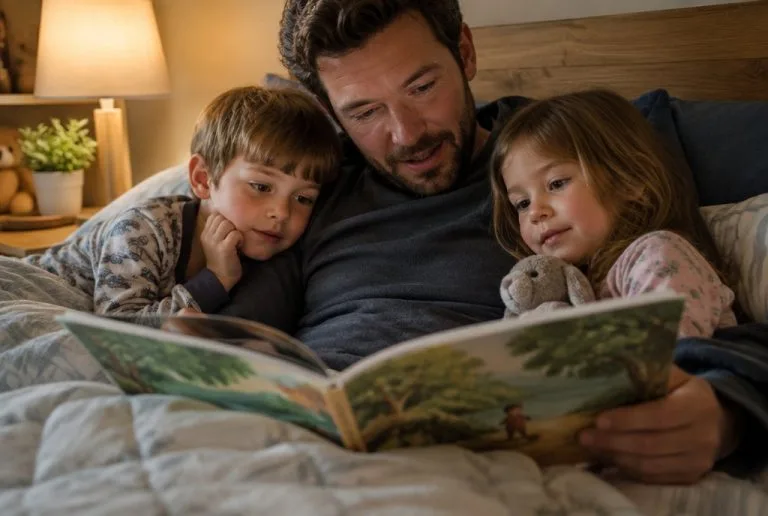
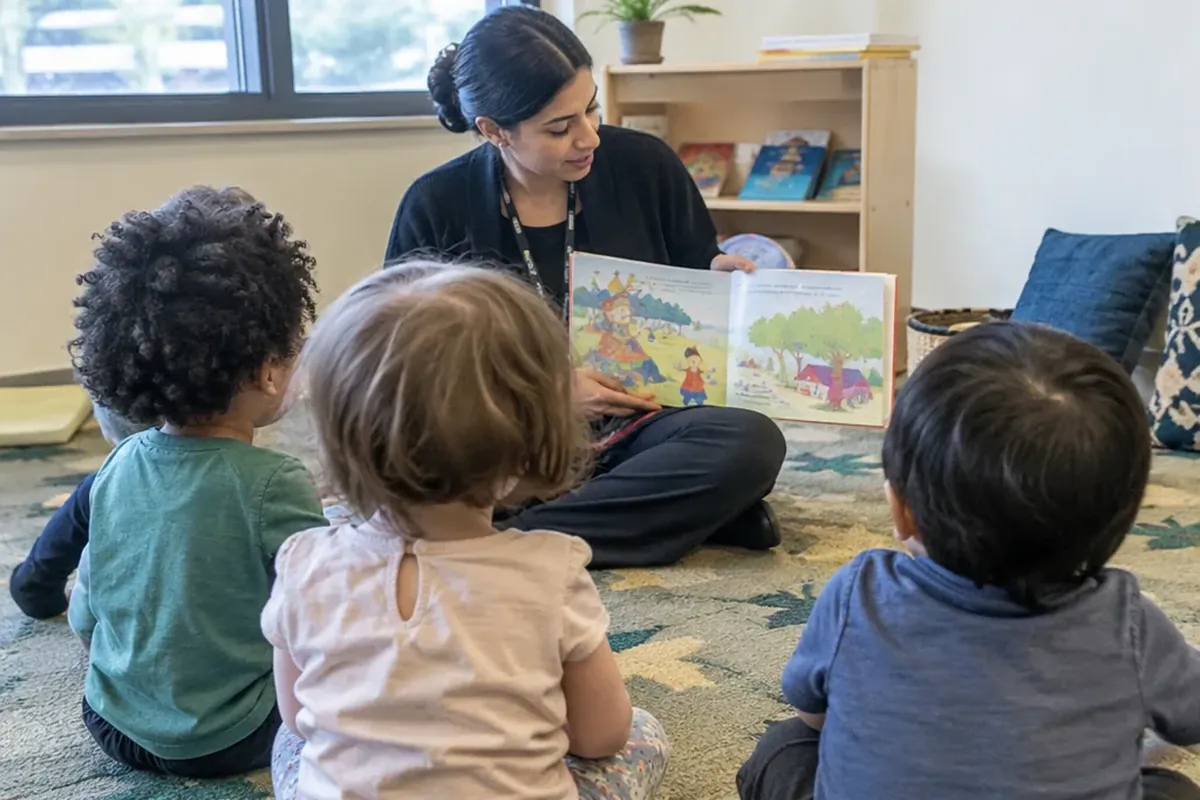
Early childhood education (ECE) is the formal and informal care and instruction that supports children from birth through age eight, traditionally through third grade. It is more than getting ready for preschool or kindergarten: young children learn through relationships, play, language, movement, and everyday problem-solving while adults create safe chances to explore.
What Is Early Childhood Education From Birth Through Age Eight?
Early childhood education brings care and learning together during a period when the brain’s architecture is being built for later learning. The related term ECCE means early childhood care and education. UNESCO describes it as a holistic, integrated approach involving young children, their caregivers, and the wider environment, also from birth to age eight.
The basic concepts of education in these years are active learning, responsive relationships, and developmentally appropriate experiences. Constructivist thinkers including Piaget, Dewey, and Vygotsky viewed children as active builders of knowledge rather than passive recipients of facts. An educator’s job is to set up an experience, watch closely, ask useful questions, and add support when it helps.
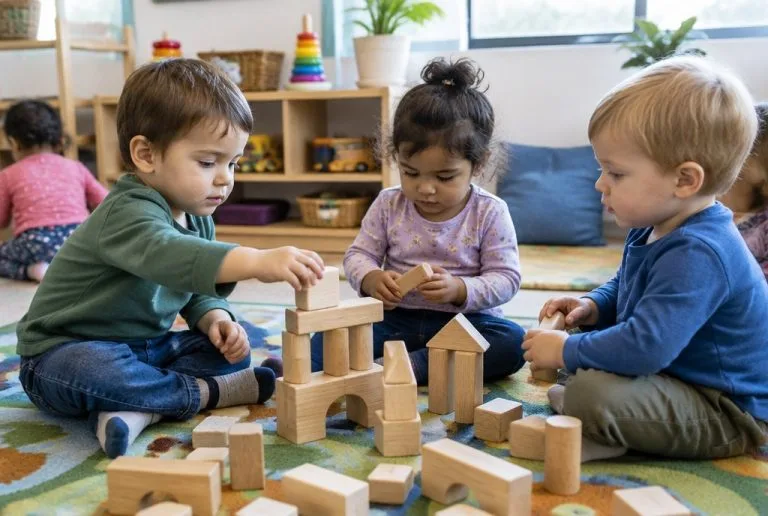
For example, a child building a bridge from blocks is not simply passing time. They may test balance, compare sizes, use new words, negotiate with another child, and decide what to try after the bridge falls. A thoughtful early childhood educator can extend that learning without taking over.
Why Early Education Matters Beyond Kindergarten
Early education matters because it supports skills that children use long after the early years: thinking, communication, relationships, self-regulation, and movement. High-quality early childhood education is also a practical way to support early learning before differences in opportunity become entrenched.
Two long-running studies show why the quality and continuity of support matter. The Perry Preschool Project in Ypsilanti, Michigan, randomly assigned 128 African American children from low-income families to a program or a control group. The program combined weekday active-learning preschool sessions lasting 2.5 hours with weekly 1.5-hour teacher home visits focused on parent-child interaction. By age 40, participants had higher high-school graduation and employment rates, lower crime rates, and more frequent home and car ownership than the control group. The project calculated a return of $12.90 for each dollar invested.
The Carolina Abecedarian Project provided high-quality care from birth to age five and followed participants into adulthood. At age 30, 36% of the treatment group had earned a four-year college degree, compared with 14% of the control group. A follow-up at age 35 also found lower rates of prehypertension and a lower estimated 10-year risk of coronary heart disease among participants. Those group findings do not predict any one child’s health; for concerns about a child’s health or development, speak with a pediatrician.
Five Areas of Development That Children Practice Every Day
Early childhood development is often described through five connected areas. A strong program does not treat them as separate subjects; it gives children experiences that touch several areas at once.
| Area | What it includes | Everyday example |
|---|---|---|
| Physical development | Gross-motor skills such as crawling, walking, and climbing, plus fine-motor skills such as grasping, drawing, and fastening buttons. | Climbing outdoors, then using a crayon to make a map. |
| Cognitive development | Thinking, memory, attention, exploration, and problem-solving. | Trying different blocks until a tower stands. |
| Social development | Building relationships and learning to participate with others. | Taking turns with a tricycle. |
| Emotional development | Expressing and regulating emotions and developing empathy. | Using words and adult support after a disappointment. |
| Language development | Understanding and using language to communicate and learn. | Retelling a story or explaining a plan to a friend. |
Development is not a race or a diagnosis. Children develop at different rates. If you are worried about a missed skill, loss of a skill, or another developmental concern, bring it to your child’s doctor rather than relying on a classroom comparison.
Which Education Programs Fit Your Family’s Stage?
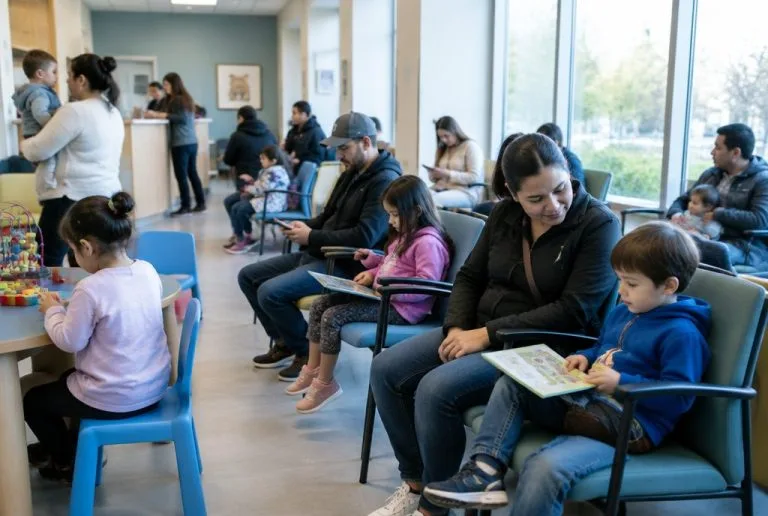
Education programs use different schedules and age ranges. What they share is the chance to support children with care, routines, and learning experiences.
- Child care or daycare: Often provides full-day care for working parents. Some centers include informal educational elements, but not every setting follows a structured curriculum.
- Preschool: Typically serves children about 2.5 to 4.5 years old. Play can build communication, creativity, social-emotional development, and early problem-solving.
- Pre-K: Usually serves four- and five-year-olds, building on preschool with more advanced read-aloud, writing, and math experiences.
- Head Start: A federally funded, free U.S. program for eligible children ages three to five from low-income families, designed to prepare children for school.
- Early Head Start: Supports pregnant women and families with children under age three.
- Kindergarten: Usually lasts one year within the U.S. public school system and prepares children for first grade.
An early childhood education program may operate in a center, school, or community setting. When comparing choices, start with your child’s age, your schedule, and the quality of adult-child interactions—not only the program’s label.
How the Main Approaches Turn Play Into Learning
Approaches give an early childhood program a way to organize the day, environment, and adult role. Many programs borrow ideas from more than one approach.
- Montessori: Children work independently in a prepared environment, often in mixed-age groups from three to six. Materials are accessible and organized by subject area; trained adults observe and guide. A typical work period is at least three uninterrupted hours.
- Reggio Emilia: An emergent curriculum grows from children’s interests. The approach views children as capable and curious, and it treats the physical environment as a “third teacher” that connects the classroom, school, and community.
- HighScope: Active learning is organized through plan-do-review: a child makes a plan, acts on it, then reflects with an adult. The approach emphasizes shared control between child and adult.
- Waldorf: Rhythm, imaginative play, artistic activity, imitation, and connection to nature shape the early years. Daily routines follow a regular, natural rhythm.
- Play-based learning: Research summarized by the Education Endowment Foundation links play-based learning with an average of four additional months of progress. Much of that evidence concerns guided play, where an adult sets up or extends the experience, rather than free play alone.
What High-Quality Early Childhood Education Looks Like
Parents cannot judge quality from colorful walls or a busy schedule alone. NAEYC’s 10 program standards cover relationships, curriculum, teaching, assessment, health, staff, families, community relationships, physical environment, and leadership and management.
Use those standards as a visit checklist. Notice whether adults build warm, respectful relationships with every child; whether the curriculum supports social, emotional, physical, language, and cognitive learning; and whether families are included as partners. Small classes, age-appropriate learning, qualified teachers, a safe environment, and family involvement are additional quality indicators.
NAEYC accreditation is voluntary and is based on these standards. It can help families make an informed choice, but a visit still matters: watch how adults respond when a child needs help, wants to join play, or becomes upset.
What Skilled Educators Bring to Young Children
People sometimes ask for the five qualities of an early childhood professional, but NAEYC’s professional standards identify six core areas, not five. They are understanding child development and learning; building family and community relationships; observing, documenting, and assessing; using developmentally effective approaches; using content knowledge; and professionalism.
In practice, a capable educator knows that culture, language, family circumstances, and a child’s individual experiences can shape learning. They use positive relationships and supportive interactions as a foundation, choose methods suited to the child’s development, and keep reflecting on their practice.
For someone considering a career in early childhood education, preparation can include formal degree programs and specialized early childhood training, depending on the role and setting. Preschool teachers in the United States had a median annual wage of $38,140 in May 2025. Requirements vary by job, so check the standards for the setting you want to work in.
Common Myths That Can Make the Search Harder
Myth: Early childhood education starts at preschool
ECE includes children from birth through age eight. Preschool is one important setting, but care, language-rich routines, responsive relationships, and guided exploration begin much earlier.
Myth: Learning means worksheets and adult-led lessons
Children can learn academic ideas through active experiences. Guided play, a plan-do-review routine, or a conversation about a block structure can involve attention, language, and problem-solving without turning the day into an elementary school lesson.
Myth: A named approach guarantees quality
A Montessori, Reggio-inspired, or play-based label does not replace careful attention to relationships, safety, qualified staff, curriculum, and family partnership. Ask how the approach is carried out in the actual classroom.
Frequently Asked Questions
What is early childhood education, and what is its purpose?
Early childhood education is formal and informal care and instruction from birth through age eight. Its purpose is to support children’s learning and development through responsive relationships, exploration, play, language, movement, and age-appropriate teaching.
What is ECCE?
ECCE stands for early childhood care and education. It describes a holistic approach that connects the young child with caregivers and the wider environment, rather than treating care and education as separate jobs.
What are the basic concepts of education in the early years?
Key concepts include active learning, relationships, exploration, reflection, and adult guidance that fits a child’s stage of development. Children construct understanding through experiences; adults make those experiences safer, richer, and easier to build on.
What are the five stages of early childhood development?
Early childhood is commonly discussed through five areas of development: physical, cognitive, social, emotional, and language. They are domains of development, not fixed stages that every child completes on the same timetable.
What makes a high-quality early childhood education program?
Look for positive relationships, a research-based curriculum, effective teaching, attention to health and safety, qualified and supported staff, family involvement, and sound leadership. NAEYC groups these and related elements into 10 quality standards.
How can someone become an early childhood educator?
Routes vary by role and setting. Preparation often includes formal education degrees and specialized training in early childhood education, alongside the qualifications required by the employer or program.