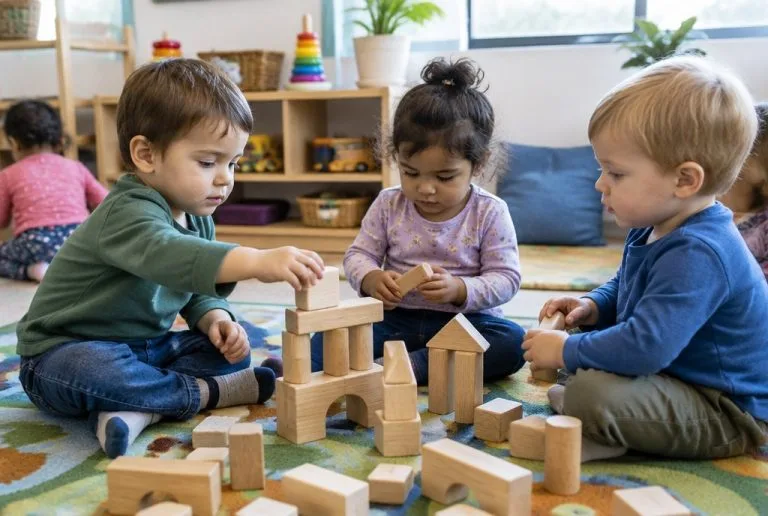
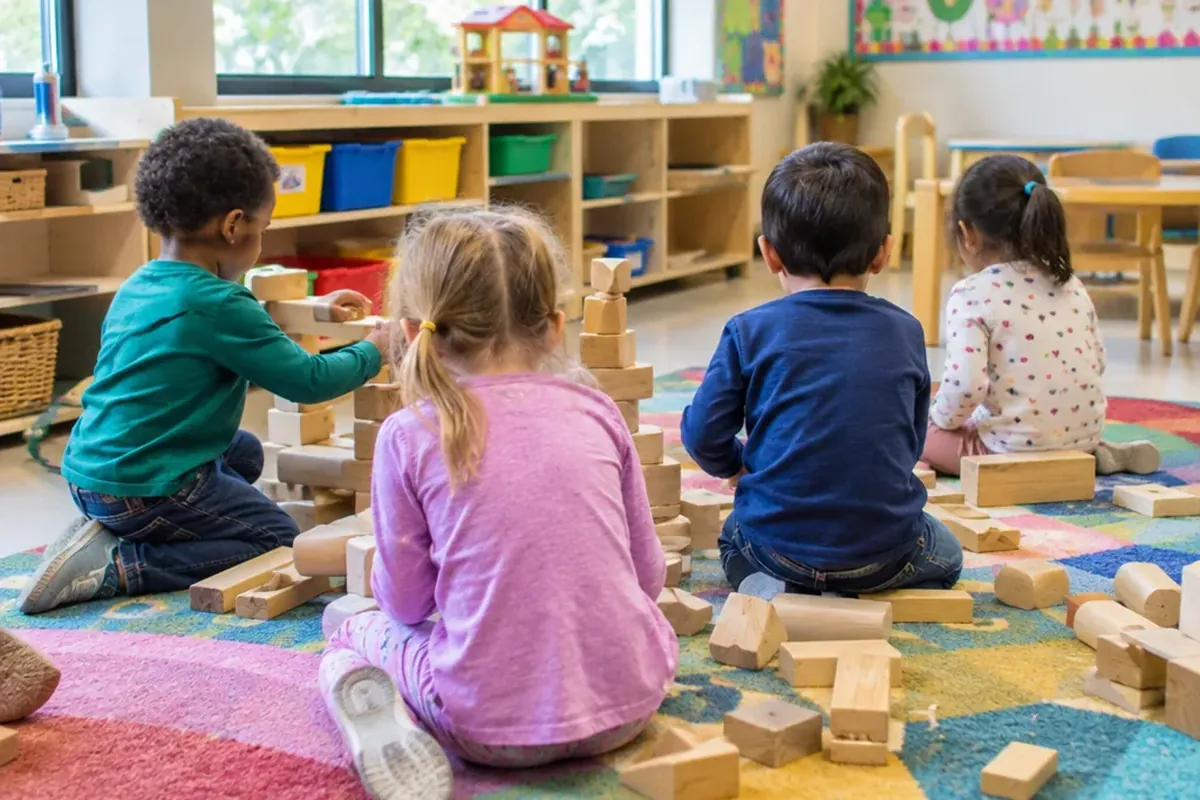
In the United States, the typical preschool age is 3 to 5, and many children start at 3. Beyond a birthday, the right time also depends on your child’s comfort with separation, communication, daily routines, and the particular program’s rules. In a toddler class, a two-year-old may thrive, while a four-year-old may be weighing pre-K or transitional kindergarten.
What is the preschool age range in the United States?
Preschool is the broad name for early education before kindergarten, usually for children ages 3 to 5. At most schools, children enter at age 3, often with the biggest group of new classmates in the fall. Still, fall is not your only option; many programs enroll children during the year when a space opens.
By age 3, a child is generally called a preschooler rather than a toddler. Gradually, often between 2.5 and 3, children become more independent, use more language, and can follow simple directions.
| Age | Common program label | What it often emphasizes |
|---|---|---|
| Under 2.5 | Toddler or “twos” program | Short, play-filled, routine-based days |
| About 2.5 to 3 | Toddler program or, at some schools, preschool | A gradual move toward more independence and group routines |
| 3 to 4 | Preschool, 3-year-old preschool, or early preschool | Play-based language, early letters and numbers, and friendships |
| 4 to 5 | Pre-K | Kindergarten readiness, including classroom routines, listening in a group, and early writing |
Across schools, program names are not standardized. Rather than relying on a class name alone, ask which birthdates a school accepts, whether it uses a cutoff date, and what a typical day looks like.
Can a 2-year-old start preschool or nursery?
In most cases, two-year-olds are placed in toddler or “twos” classes rather than formal preschool. There, short, predictable days with plenty of play are common. From age 2.5, some programs accept children; that fit can be good for a social, curious child, but the adjustment may take longer.
In the United States, “nursery school” can be another name for preschool and commonly serves children from 2 to 5. From just weeks old, daycare can begin much earlier, while preschool or nursery often begins around 2.5 to 3. Before applying, ask which age group and daily schedule the school means by that word.
Ask about toileting before you apply
Across programs, potty-training policies differ sharply. While some classes for two-year-olds require toileting independence, others accept children who still need help or diapers. Even without potty training, a child may be a good fit for many toddler programs, but the school’s own policy decides enrollment.
Preschool vs. pre-K vs. nursery: choose the label that fits the class
As an umbrella term, preschool covers pre-elementary education for ages 3 to 5. By contrast, pre-K, short for pre-kindergarten, is usually the final preschool year for four- and five-year-olds and puts more focus on the transition to kindergarten. Its activities may include early letters and numbers, writing a name, listening during group activities, and following a classroom routine.
For a 3-year-old, the class is usually simply called preschool, sometimes “3-year-old preschool” or early preschool. Generally, pre-K is not the name for that entry-level class.
Other options exist, too. For low-income families, Head Start serves children ages 3 to 5; Early Head Start serves children from birth to age 3. Primarily in California, Transitional Kindergarten, or TK, is a public-school option for four-year-olds who need an additional year before kindergarten. By the 2025–26 school year, California had expanded TK to all four-year-olds.
How to tell whether your child is ready for preschool
Readiness is not the absence of tears. Instead, ask whether your child can recover after goodbye and return to play within a short time. Across ordinary routines, look for patterns rather than letting one hard drop-off settle the question.
- Separation: Your child may protest, then can calm with another caring adult and rejoin play.
- Communication: At age 3, adults outside the family understand your child most of the time, and your child can say needs such as “water,” “help,” “stop,” or “hurt.”
- Directions: Your child can handle a simple two-step request, such as picking up a ball and putting it in a basket.
- Toileting: Where required, your child can signal the need to go, stay dry for one to two hours, and pull clothing up or down with some help. Accidents are normal.
- Transitions: Moving from play to cleanup or indoors to outdoors does not overwhelm your child every time.
Throughout the day, sleep supports a child’s ability to cope. For children ages 3 to 5, the recommendation is 10 to 13 total hours of sleep in 24 hours, including naps. With enough rest, a child may separate more calmly and manage emotions more easily. If you have concerns about your child’s development, discuss them with the child’s health care professional rather than using a preschool checklist as a diagnosis.
What preschool can offer—and what it cannot promise
Through play, a preschool program can give children repeated chances to practice language, early literacy, numbers, routines, and friendships.
Although research has found long-term associations worth taking seriously, it does not turn preschool into a one-size-fits-all answer. In the HighScope Perry Preschool Study, 123 randomly assigned children were followed to age 40; participants were more likely to graduate high school, earn higher incomes, own a home, and commit fewer crimes. Using ECLS-K data, a 2018 study found better achievement-test performance from age 5 through early adolescence for preschool attendees than for children in informal care at age 4.
Alongside program quality, time in care matters. In that 2018 study, children attending 20 or more hours weekly showed less optimal psychosocial skills, with negative behavioral effects concentrated among full-day attendees. Rather than assuming more hours automatically mean a better fit, consider your child, the program, and the schedule together.
How to find a quality preschool program
Start with the everyday experience, not only the classroom’s name. During a tour, look for secure entry and sign-in, clean child-sized spaces, a fenced playground with soft surfaces, and posted emergency plans. Ask, “What does a typical morning feel like for a child?” and “How do you handle separation anxiety?”
One concrete point to check is staffing. For a preschool class, Child Care Aware of America recommends one adult for every 10 four-year-olds. Where one is available, ask whether the program participates in your state’s quality rating system. In 2023–2024, only 18 state-funded programs met 9 or 10 of NIEER’s quality benchmarks, while 21 programs met five or fewer and served 44% of children in state-funded preschool.
Because preschool is not compulsory in the United States, it is reasonable to decide it is not right for your family right now. By state, kindergarten rules vary: 20 states require kindergarten attendance, while in other states compulsory schooling begins later. Before planning around a kindergarten cutoff, check your state and local district’s rules.
Make the first weeks easier before you start preschool
Before the first day, preparation works best when it makes the new routine familiar rather than dramatic. Two weeks beforehand, begin a “school bedtime.” If you can, visit the school playground, choose a backpack together, and practice brief 10- to 20-minute separations with a trusted caregiver.
- Use pretend play to rehearse saying goodbye, circle time, snack, naptime, and pickup. Let your child be the teacher once.
- Create one short goodbye ritual: a song, a kiss on the palm, or a consistent phrase such as “Daddy always comes back.”
- On the first day, if the school permits, stay for 15 to 30 minutes, then give a quick, upbeat goodbye. Resist the urge to run back if your child cries.
- Practice a calming tool at home, such as slow breathing: “smell the flower, blow out the candle.”
Common preschool myths that can make the choice harder
Myth: Every 3-year-old should start right away
At age 3, the most common starting point is not a rule. Depending on the child, a toddler setting may come first, or waiting may be the better choice. Alongside readiness, availability, program policies, and family needs all matter.
Myth: Tears mean a child is not ready
At drop-off, separation tears are not the same as unreadiness. More telling is whether a child can settle after goodbye and return to play with support.
Myth: Pre-K and preschool are interchangeable
Although the terms overlap, pre-K usually refers to the last preschool year for four- and five-year-olds and has a stronger kindergarten-readiness focus. For a three-year-old, the class is more often simply preschool.
Myth: Preschool is required before kindergarten
In the United States, preschool is not compulsory. Without treating enrollment as a legal requirement, families can weigh the benefits against their child’s needs and the available programs.
Frequently Asked Questions
Is a 2-year-old ready for preschool?
For many two-year-olds, toddler or twos programs with play and familiar routines are the best fit. From age 2.5, some schools accept children, but ask about their toileting policy and expect that adjustment may take time.
Can I put my 2-year-old in nursery?
Often, yes. In the United States, nursery school may be used interchangeably with preschool and can serve ages 2 to 5. Before enrolling, confirm the school’s minimum age, schedule, and toileting requirements.
Is a 3-year-old a toddler or a preschooler?
By age 3, a child is generally considered a preschooler. Through roughly age 2.5, toddler programs usually serve children, though the transition can happen gradually.
What is preschool for 3-year-olds called?
For a 3-year-old, the class is usually called preschool, 3-year-old preschool, or early preschool. By contrast, pre-K typically serves four- and five-year-olds.
When do kids start preschool?
Typically, children who go to preschool start at age 3. Although fall is a common entry point, a program may accept children year-round when places open.
Is preschool mandatory?
No. In the United States, preschool is not compulsory. By state and local district, kindergarten attendance rules and cutoff dates vary.